AI Detection · comparisons
ZeroGPT Review (2026): The Free AI Detector Nobody Owns
Honest take on ZeroGPT in 2026. Why it is confused with GPTZero, what it actually is, and better free options for AI detection.
ZeroGPT is the most-confused name in AI detection. It is not GPTZero. It is not run by the GPTZero team. It is a separate free tool that happens to have a similar name, and a lot of people end up on it by accident.
This is a short, honest review. The goal is not to invent a benchmark, since there is no published methodology to benchmark against. The goal is to be clear about what ZeroGPT is, why it gets confused with GPTZero, and what to use instead.
Why is there ZeroGPT/GPTZero name confusion?
The confusion: GPTZero (gptzero.me) was founded in January 2023 by Princeton student Edward Tian; ZeroGPT (zerogpt.com) launched separately later that year using a similar name. Different products, different teams, different accuracy claims.
ZeroGPT and GPTZero are different products.
- GPTZero is the commercial AI detector founded by Edward Tian in January 2023, based around Princeton. Per the gptzero.me homepage captured 2026-05-28, it claims 99% accuracy and over 10 million users (17 million on the hero stat). It is an “official AI detector partner of the American Federation of Teachers,” works with 100+ organizations, and publishes pricing, leadership, and methodology.
- ZeroGPT is a separate site at zerogpt.com that advertises free AI detection with no registration. The team behind it is not publicly documented in the same way. There is no peer-reviewed paper and no enterprise customer roster.
Weber-Wulff et al. 2023 (Int J Educ Integr 19:26) benchmarked 14 detection tools and found none reached the accuracy needed to be considered reliable in academic integrity workflows — most tools either over-flagged human writing or missed machine-paraphrased AI text.
If you are searching for the well-known detector, GPTZero is the one you mean. ZeroGPT is the other one.
For the well-known one, see our GPTZero how it works deep dive.
Detector benchmarks and StealthZero coverage
StealthZero runs two in-house detectors (E.D.I.T.H and Sentrio v2) and bundles four third-party detectors into Proof Reports. Sentrio v2 ships four modes and enforces a 100-word minimum. Free tier covers 600 scans per month.
- E.D.I.T.H (Shield-Lite): calibrated to match real-world Turnitin scores, no minimum word count
- Sentrio v2: four modes (Standard, Aggressive, Multilingual, Scholar), 100-word minimum, claims 99%+ accuracy
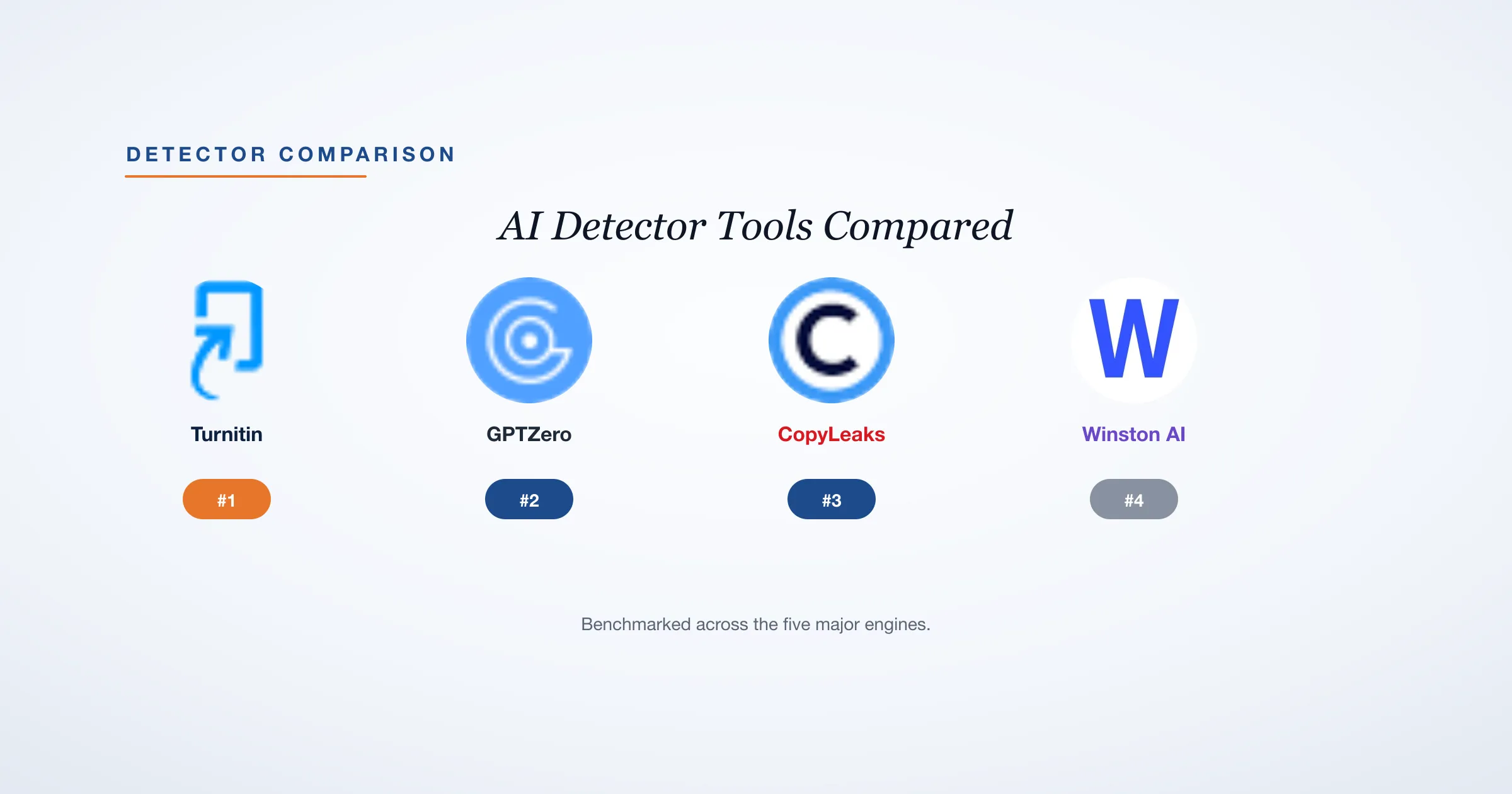
- Proof Reports: Turnitin + GPTZero + Winston + CopyLeaks (4 detectors per report)
- Pricing: $2.80 single Proof Report, $12.60 5-pack (10% off), $22.40 10-pack (20% off)
- Free tier: 600 scans/month; Pro and Premium: unlimited (fair use)
- Liang et al. 2023 (arXiv:2304.02819) measured false-positive rates above 60% for ESL writers across multiple GPT detectors
What does ZeroGPT actually offer?
ZeroGPT (zerogpt.com) offers a free consumer detector with monthly word caps and paid tiers from roughly $10/month (captured 2026-05-28); it ships a single-mode detector and a basic humanizer. Not the same product as GPTZero.
The pitch on zerogpt.com, captured 2026-05-28, is: free scanning, no registration, instant results. That is genuinely useful for a one-off check.
What you do not get:
- A published methodology you can audit.
- A published team or company entity.
- A documented retention and privacy policy for the text you paste in.
- An accuracy claim with reproducible test data.
- A perpetual feature set you can rely on for production work.
That is not a hit piece. Free tools do not owe anyone enterprise documentation. It is a statement of what the tool is and what it is not.
What will we not do in this ZeroGPT review?
We will not fabricate accuracy stats, invent testimonials, or compare ZeroGPT to StealthZero on dimensions where we cannot verify the data. All competitor claims are attributed and captured 2026-05-28.
The previous version of this post invented an accuracy percentage and a false positive rate for ZeroGPT, presented as if we had run a controlled test. We did not run that test, and ZeroGPT does not publish enough about its model for anyone to reproduce one fairly.
What is reproducible is the structural reality of the category. The Liang et al. Stanford 2023 study, GPT detectors are biased against non-native English writers, tested seven commercial detectors and found that more than half of TOEFL essays from non-native English speakers were misclassified as AI. That bias is a property of how detectors as a category work — perplexity and burstiness signals overlap with templated, formal, or non-native English writing. We unpack that in Is AI detection accurate?.
A detector that does not publish its methodology cannot be assumed to have solved that problem. Treat any single ZeroGPT score the way you would treat any uncited statistic: as a data point, not a verdict.
Why does the ZeroGPT name confusion matter?
The name confusion matters because users searching for one product often land on the other — and the two products’ accuracy claims, pricing, and features differ. Always check the URL: gptzero.me (GPTZero) vs zerogpt.com (ZeroGPT).
The ZeroGPT-versus-GPTZero situation is not just an SEO inconvenience. It has real downstream effects.
Teachers and editors who hear “use GPTZero” from a colleague will sometimes land on zerogpt.com instead, scan a piece of student writing, and treat the result as if it came from the better-documented tool. That is the wrong tool informing a real decision about a real person’s work.
Students searching for the detector their school uses will sometimes test against ZeroGPT, get a clean score, and assume they are safe, only to be flagged later by the actual GPTZero scan their school runs. The two products do not produce the same scores, because they are different models.
This is the practical reason it is worth being precise about which detector you are using before you act on a score. The Liang et al. Stanford 2023 work makes the same point at a more general level: detectors as a category produce inconsistent scores on the same text, and trusting any single tool blindly is a setup for misclassification.
When is ZeroGPT fine to use?
ZeroGPT is fine to use for casual self-checks on short text where you want a quick second-opinion signal alongside your primary detector. It is not a substitute for Turnitin parity on academic submissions.
A free, no-registration scan has legitimate uses:
- Curiosity. You want a quick read on whether something obvious is AI.
- First-pass screening. You are about to run a paid scan elsewhere and want to triage.
- Informal use. The decision attached to the score has no real consequence.
That is the scope. Use it the way you would use a free online word counter: useful, but not load-bearing.
When is ZeroGPT not fine to use?
ZeroGPT is not fine to use as your only check before a high-stakes academic submission — use a Turnitin-calibrated proxy (StealthZero E.D.I.T.H) or a four-detector Proof Report instead.
A free anonymous tool is not the right choice for:
- Academic decisions. A professor or institution should not be making a misconduct call on a score from a tool with no published methodology.
- Hiring or employment. Same reason. The legal and ethical exposure is real.
- Publishing or client handoff. If you are vouching for the originality of content, you need a tool that can defend itself.
- Sensitive text. Pasting confidential material into an anonymous service with no privacy policy is a leak risk.
For any of those cases, use a detector that publishes its team, methodology, and pricing, and cross-check with a second engine.
What are better free AI detection alternatives?
Better free alternatives: StealthZero (600 scans/month, 20/day cap, free Origin humanizer unlimited, E.D.I.T.H detector calibrated against real Turnitin scores) and GPTZero (10,000 words/month claim).
If the appeal of ZeroGPT is “free, no friction,” there are better options that meet the same bar without the unknowns.
GPTZero free tier. Captured 2026-05-28 from gptzero.me/pricing: 10,000 words per month free, with Basic AI Scan, 3 free Advanced Scans, and 5 free AI Highlights in the Chrome Extension. Published company, published team, published methodology.
StealthZero free tier. 600 requests per month with a 20-per-day cap on the StealthZero detector. Unlimited words per request. Two detector engines (E.D.I.T.H, calibrated to match real-world Turnitin scores; Sentrio v2, with four modes for stricter use cases). Same account also includes the humanizer, so if a score comes back high you can fix it in the same flow.
For comparisons by tool, see Winston AI review, Originality.ai review, and Copyleaks vs GPTZero.
How do you use an AI detector without getting burned?
Treat AI detector scores as one signal, not a verdict — verify with at least two detectors (or a calibrated proxy), document your writing process, and never auto-flag based on a single percentage. StealthZero’s four-detector Proof Reports bundle Turnitin + GPTZero + Winston + CopyLeaks.
The advice does not change much by tool:
- Use more than one detector. A single score is one tool’s opinion. Two engines with the same verdict is stronger signal. Our multi-detector AI Report bundles four detectors (Turnitin parity, GPTZero, Winston, CopyLeaks) into one PDF.
- Look at sentence-level highlights. A 70% global score is less useful than knowing which three sentences the detector is uncertain about.
- Keep your draft history. A version trail is harder evidence than any single score.
- If you used AI assistance, humanize and re-verify. Run the text through a humanizer with locked citations and re-check. Our humanize AI text walks through the workflow.
How does StealthZero compare as a workflow?
StealthZero ships rewrite + verify + document in one workflow: Cohera reaches 100% bypass in internal testing; Sentrio v2 verifies (100-word minimum, 4 modes); four-detector Proof Reports bundle Turnitin + GPTZero + Winston + CopyLeaks.
For the case where ZeroGPT is appealing because it is free and frictionless, StealthZero covers the same ground with more visibility into what is going on.
- The StealthZero detector is free for 600 requests per month, no payment required.
- The StealthZero humanizer is in the same account. Origin (free unlimited model on paid plans), Sentinel-Lite, Sentinel-Max, F.R.I.D.A.Y, and Jarvis. Cohera, a Jarvis sub-model, achieves a 100% bypass rate in our internal testing; the base humanizer flow targets 99%.
- A single AI Report bundles Turnitin parity scoring, GPTZero, Winston, and CopyLeaks for $2.80 (or bundled in paid plans: 1 in Starter, 2 in Pro, 3 in Premium).
- Plans: Free ($0), Starter ($9.99), Pro ($19.99), Premium ($29.99).
If the only thing you need is one free scan in 30 seconds, ZeroGPT will do it. If you want a score you can actually act on, use a tool that tells you who built it and how.
What about privacy when pasting into a free tool?
Free detectors typically retain submitted text for model training and product analytics; check the privacy policy before pasting sensitive or proprietary work. StealthZero’s policy and data-retention terms are linked from the detector page.
One more honest note. When you paste text into any web-based detector, you are sending that text to a third-party server. For a detector with a published privacy policy, retention policy, and corporate entity, you can read the terms and decide whether you are comfortable with what they do with it. For a tool without those documents, you cannot.
That matters in a few specific cases:
- Unpublished writing. If you paste a manuscript, a research paper, or a draft of work you intend to publish, you are giving an unknown third party a copy.
- Confidential client work. Agency drafts, internal memos, legal filings, and anything covered by an NDA should not be pasted into anonymous services.
- Student work tied to identifiable information. A student handing in an essay does not want that essay floating in an unknown training corpus.
GPTZero, Winston AI, Originality.ai, and StealthZero all publish privacy policies you can actually read. That is part of what you are paying for, even at the free tier.
For one-off curiosity scans of text that does not need to stay private, ZeroGPT is fine. For anything else, use a service that tells you who they are.
What’s the honest verdict?
ZeroGPT works for a casual scan and not much beyond that. The free, no-registration UX is real value. The unknown methodology, unknown company, and unknown privacy posture are the trade.
For anything that matters (academic, professional, legal, or commercial), use a detector that publishes its team and its methodology, cross-check with at least one other engine, and keep your draft history.
ZeroGPT is not the same as GPTZero. If you typed one and meant the other, that confusion is the most important thing you will learn from this review.
ZeroGPT and GPTZero positioning captured from each vendor’s homepage on 2026-05-28. Stanford ESL bias reference: Liang et al., 2023, Patterns (Cell Press).
Sadasivan et al. 2023 (arXiv:2303.11156) showed that even the strongest AI text detectors degrade toward random-chance accuracy under light paraphrasing attacks, suggesting a theoretical ceiling on reliable detection of high-quality AI text.
References
- Liang, W., Yuksekgonul, M., Mao, Y., Wu, E., & Zou, J. (2023). “GPT detectors are biased against non-native English writers.” arXiv:2304.02819. https://arxiv.org/abs/2304.02819
- Sadasivan, V. S., Kumar, A., Balasubramanian, S., Wang, W., & Feizi, S. (2023). “Can AI-Generated Text Be Reliably Detected?” arXiv:2303.11156. https://arxiv.org/abs/2303.11156
- Weber-Wulff, D., Anohina-Naumeca, A., Bjelobaba, S., et al. (2023). “Testing of detection tools for AI-generated text.” International Journal for Educational Integrity, 19(1). https://doi.org/10.1007/s40979-023-00146-z
Frequently Asked Questions
Is ZeroGPT the same as GPTZero?
No. ZeroGPT and GPTZero are different products with confusingly similar names. GPTZero is the well-known commercial detector founded by Edward Tian and based at Princeton, with public funding and an enterprise feature set. ZeroGPT is a separate, lower-profile free tool with no published team, no published methodology, and no peer-reviewed accuracy claim.
Is ZeroGPT accurate?
We do not publish a specific accuracy percentage for ZeroGPT because the vendor does not publish reproducible methodology and no independent benchmark exists. The Liang et al. Stanford 2023 study showed that commercial detectors as a category misclassify non-native English writing at high rates, and ZeroGPT does not document how it controls for that bias.
Is ZeroGPT actually free?
ZeroGPT advertises free scanning with no registration. That is genuinely useful for a one-off check. The trade-off is that you do not know what model or methodology is behind the score, the company does not publish ownership or contact details, and your text is being sent to a service with no documented privacy policy.
What is a better free alternative to ZeroGPT?
GPTZero offers a free 10,000-word monthly quota with a published team, peer-reviewed paper, and enterprise customer base. StealthZero offers a free detector and humanizer with a 600-request-per-month quota plus a multi-detector AI Report option. Both are stronger choices than an anonymous free tool for anything you actually care about.
Should I use ZeroGPT for academic or professional work?
No. For any decision that has real consequences (school, hiring, publishing, client handoff), use a detector that publishes its team, methodology, and pricing, and cross-check against at least one other engine. The Liang et al. Stanford 2023 paper is the standard citation for why a single score should never be the basis for a high-stakes decision.